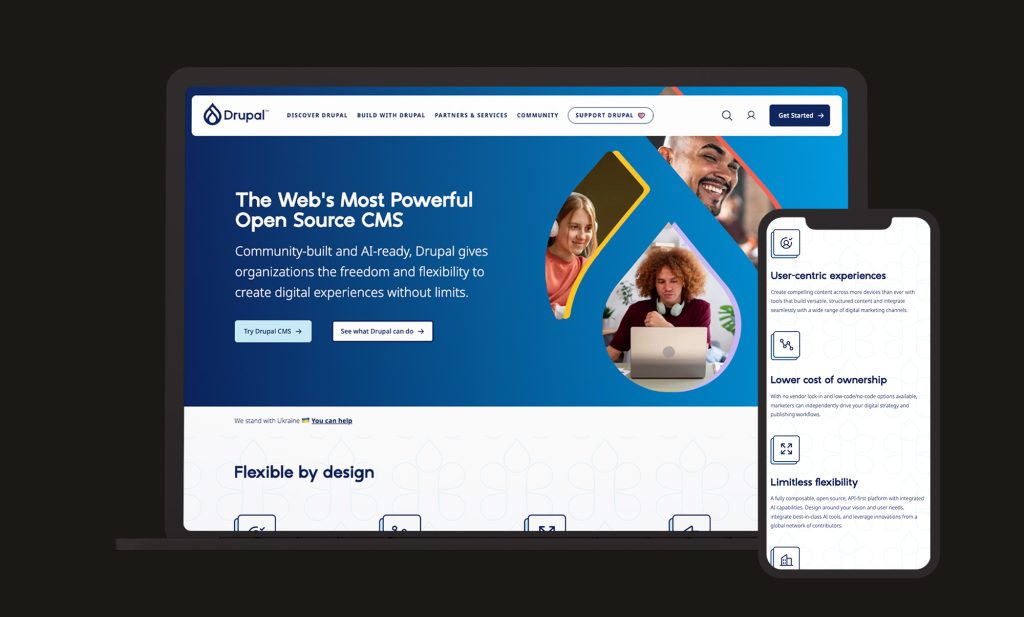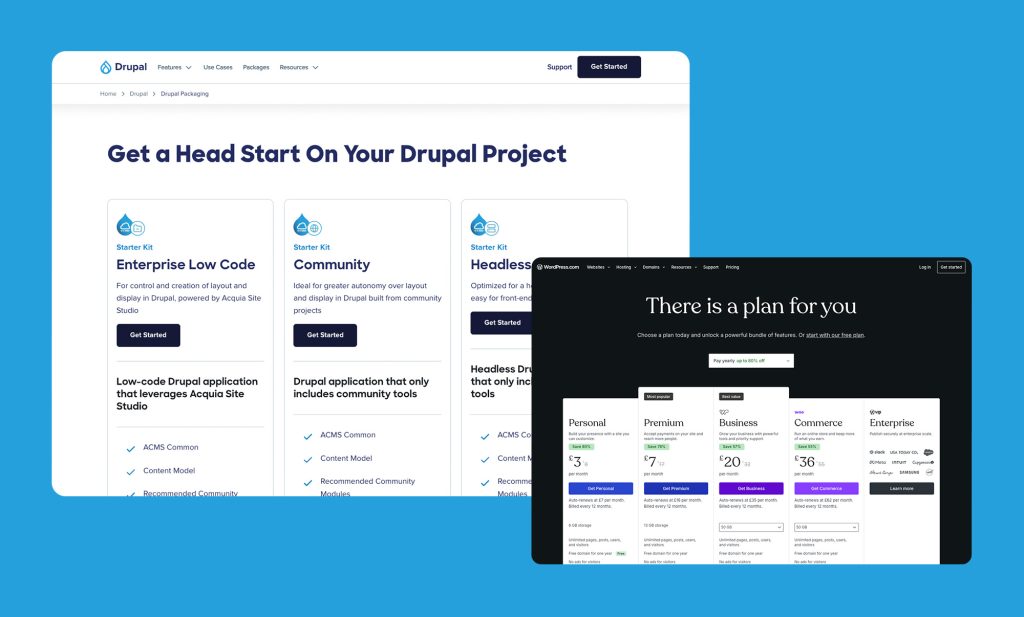
Drupal and WordPress share more history than most rival platforms, both launched in the early 2000s, both open source, both free at the core. But they were built to solve different problems. WordPress prioritised ease of publishing from day one. Drupal prioritised structure, permissions, and governance, the kind of controls large organisations with multiple teams, strict compliance requirements, or complex content hierarchies actually need.
That positioning shows clearly in who uses each platform. WordPress runs everything from personal blogs to major media sites. Drupal has become the platform of choice for governments, universities, and large enterprises, organisations including Amazon, Walmart, and Apple have Drupal somewhere in their technology stack, even where it isn’t necessarily their primary public-facing platform.
We build primarily on WordPress, so we’ll say upfront where our bias sits. But Drupal’s reputation in the enterprise and public sector space is genuinely earned, and this comparison is really about matching the platform to the governance and complexity your organisation actually needs, not declaring an outright winner.